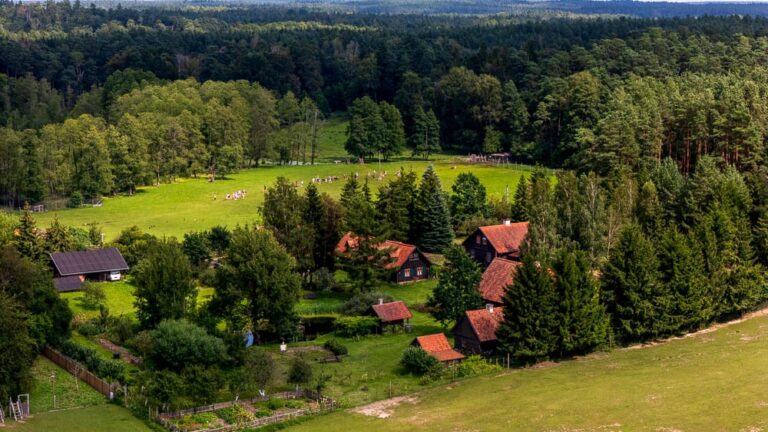
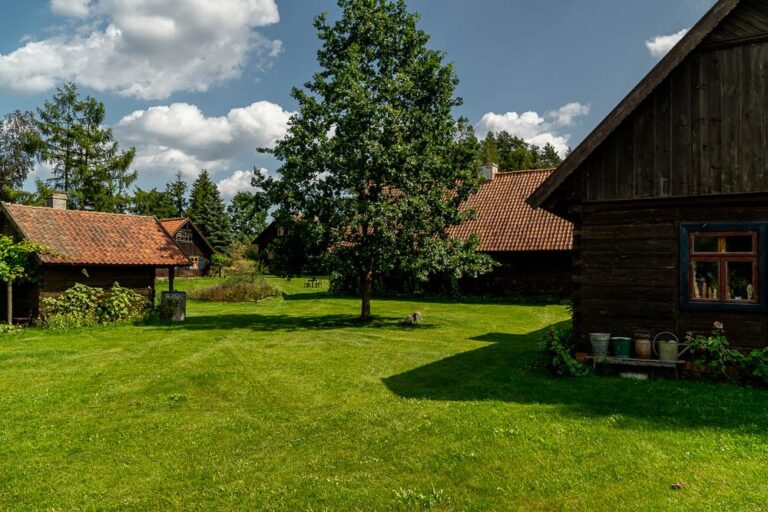
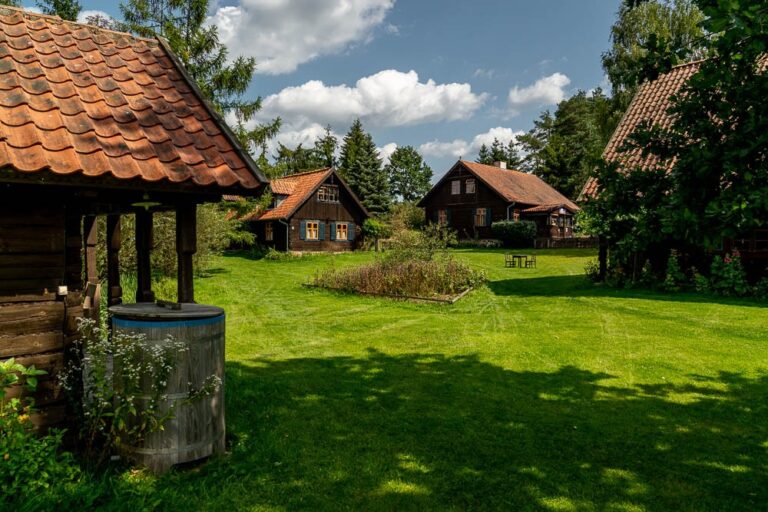
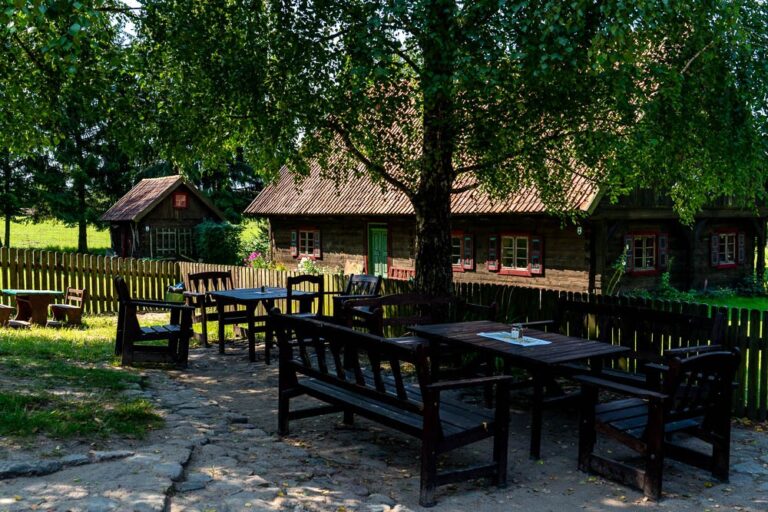
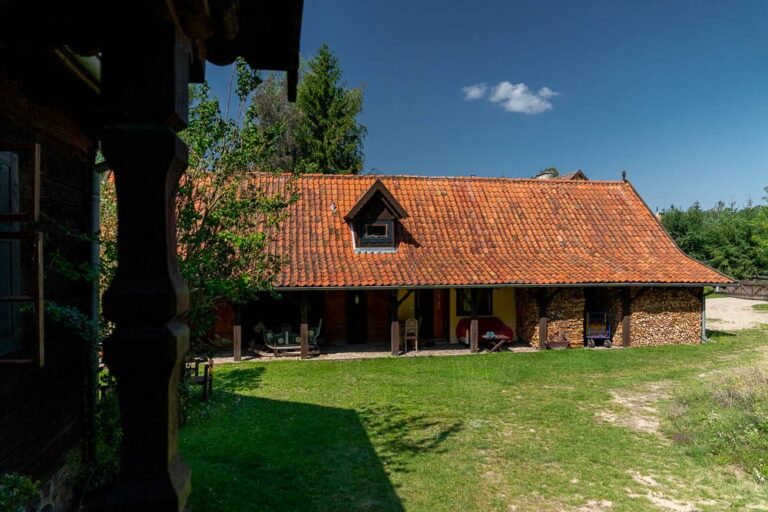
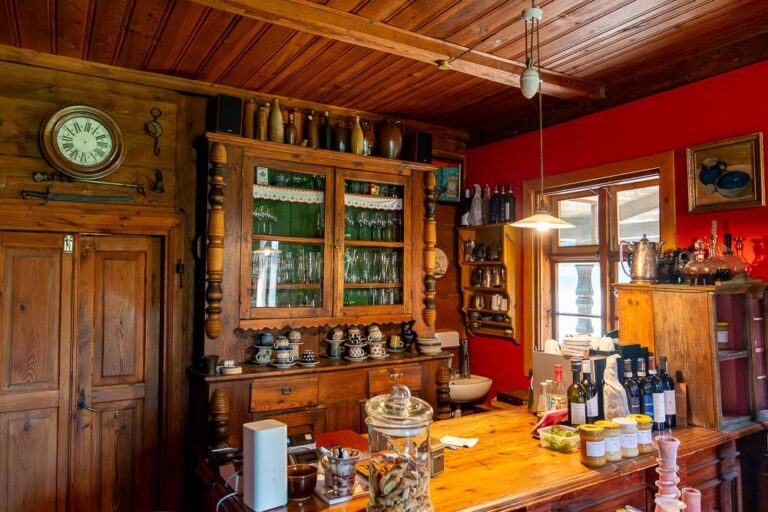
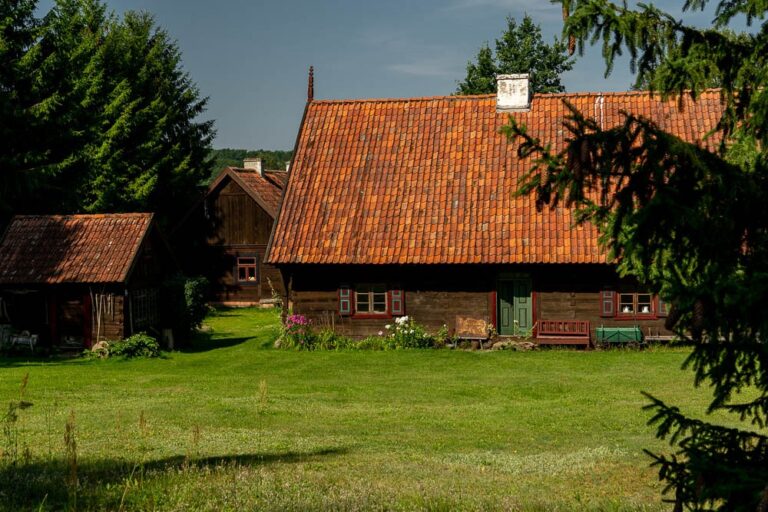
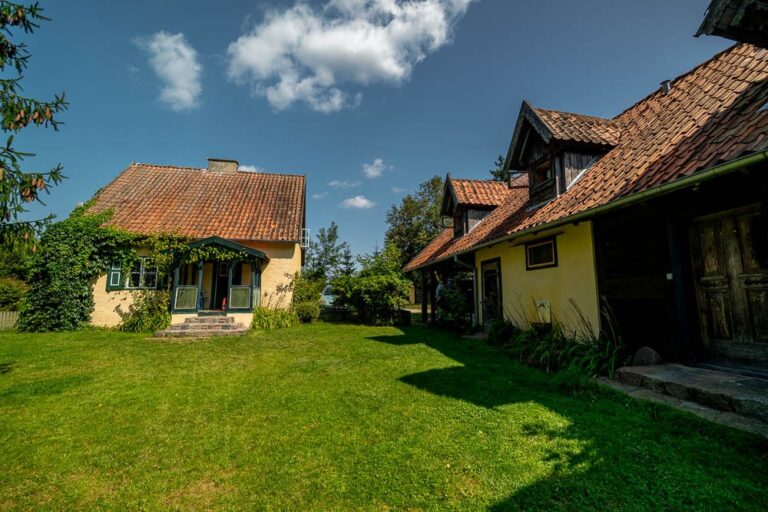
Also known as the Museum of Old Mazurian Architecture, this site is a private collection of six buildings salvaged from southern Mazury and the Mazurian-Kurpie borderland, relocated here by the husband and wife team of Danuta and Krzysztof Worobiec. The first building to be located here was a masonry Mazurian house from the 1930s, which now serves as guest accommodation. Another building now houses the “Oberża pod Psem” Inn, where the owners run a restaurant serving Mazurian cuisine.
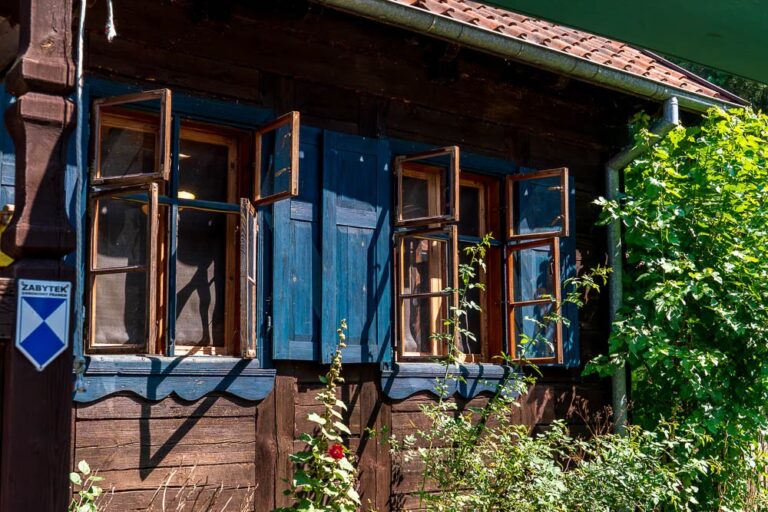
In 2004, the “Cultural Settlement” in Kadzidłowo was entered into the Registry of Cultural Property by the Voivodeship Heritage Preservation Officer in Olsztyn due to its “considerable scientific, historical, aesthetic, and scenic value” as “the only wooden architectural ensemble of this scale in our voivodeship”.
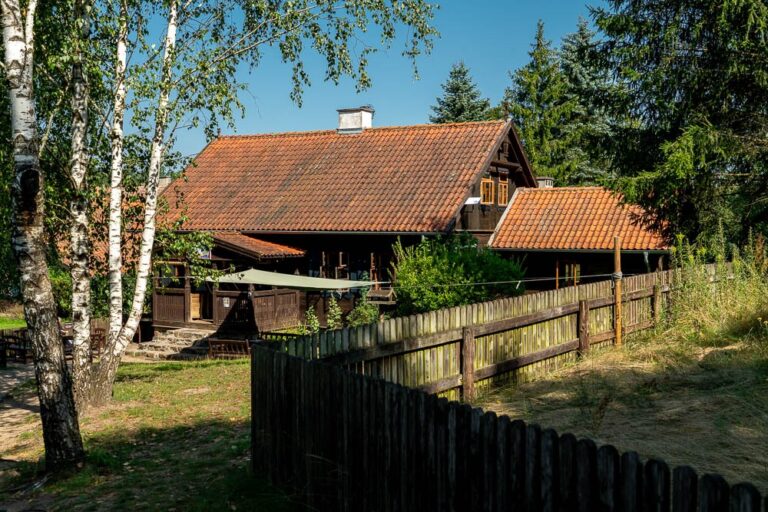
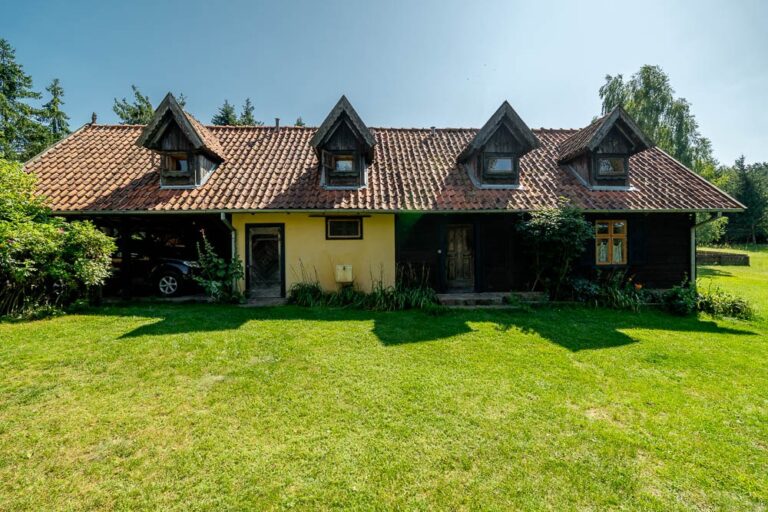
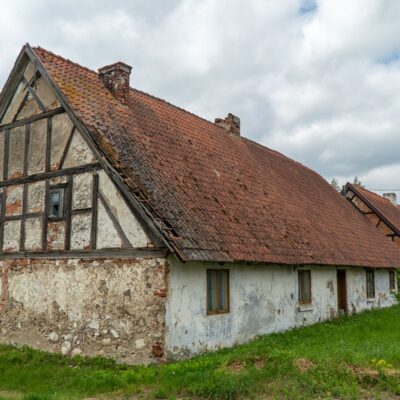
The “Oberża pod Psem” Inn is housed in a wooden, nearly 100 years old historic building. In addition to the Inn, the settlement features the “Early 19th-Century Mazurian Arcaded Cottage” museum and guest rooms.
The remaining buildings are:
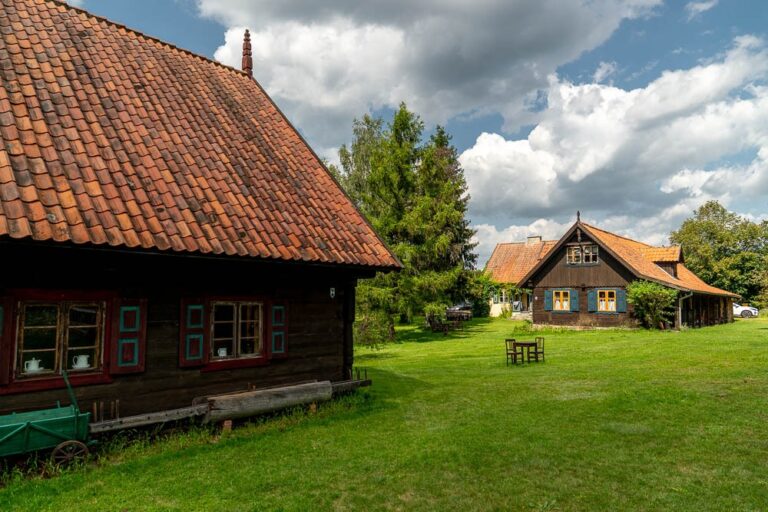
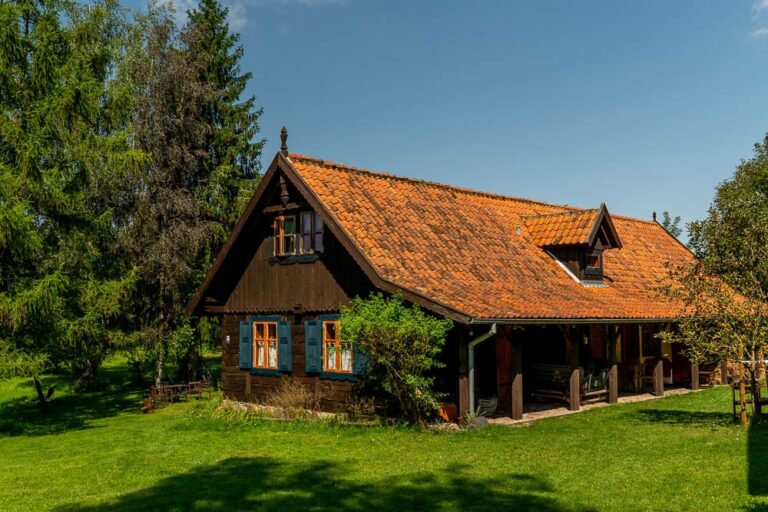
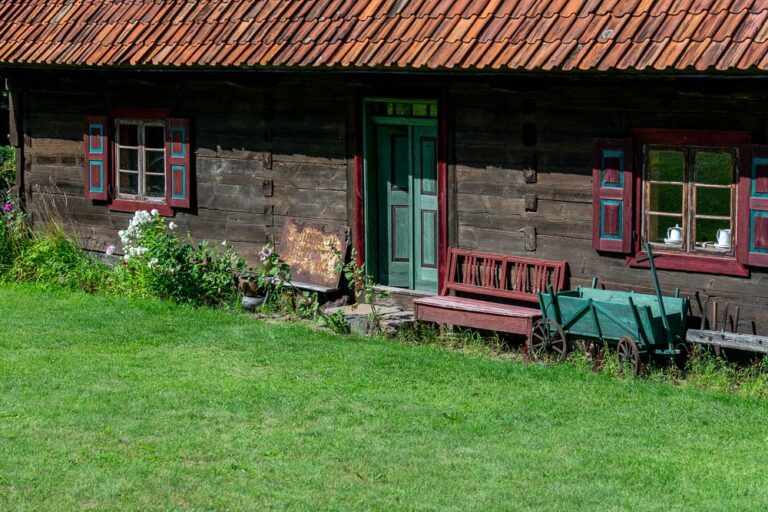
• a 200-year-old arcaded cottage from Warnowo (early 19th c.), which houses the museum
• a cottage from Dąbry (early 20th c.), now serving as the “Oberża pod Psem” Inn
• a long farm building (early 20th c.) from the Rozogi area
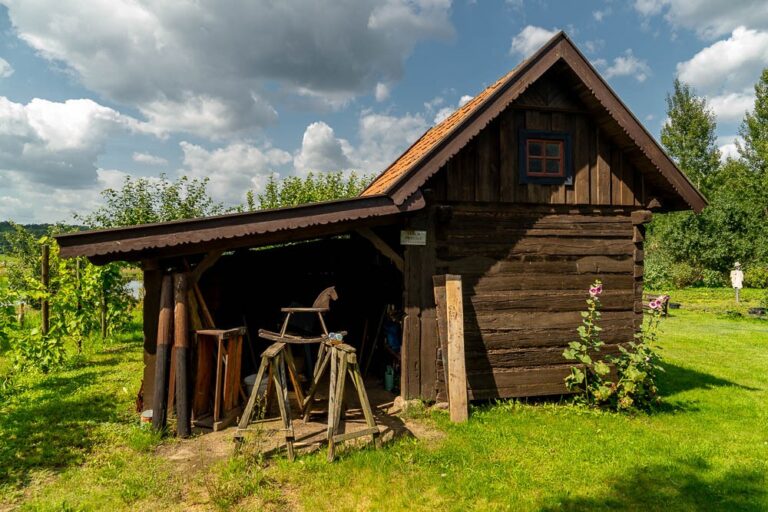
• a small granary (early 20th c.), adapted as a museum exhibition space
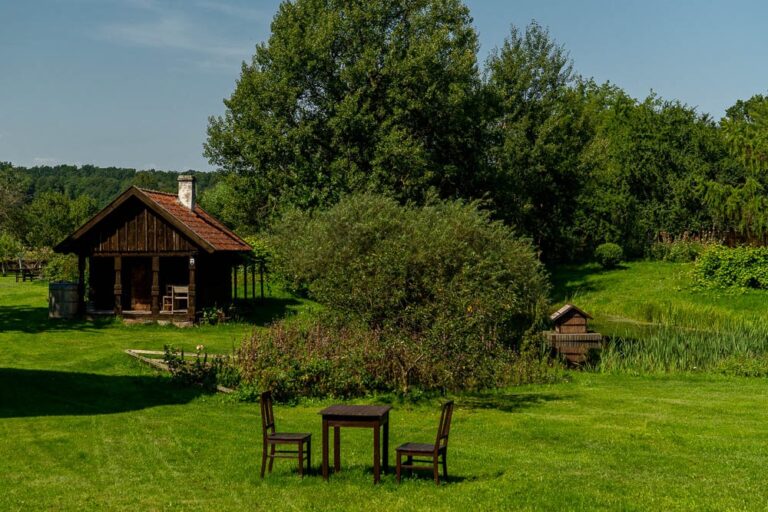
• an arcaded granary (early 20th c.), transformed into a traditional Russian steam sauna (“banya”)
• an arcaded residential-and-farm building (a cottage from Rozogi), serving as guest accommodation
The settlement’s most valuable asset is the arcaded cottage made of massive logs, relocated from Warnowo. It is a true rarity – only two such 200-year-old buildings (with arcades on both gable ends) survive today!
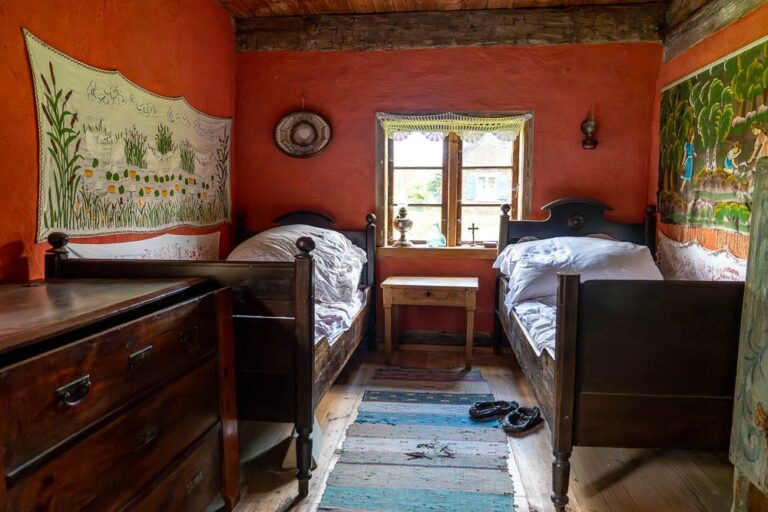
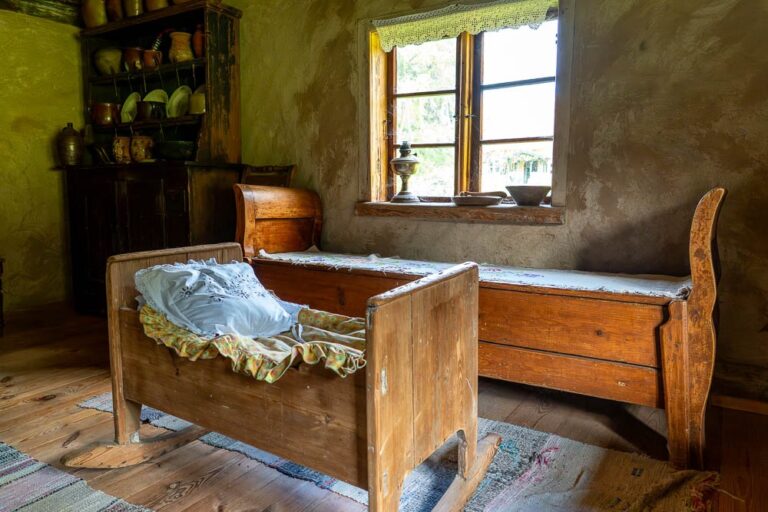
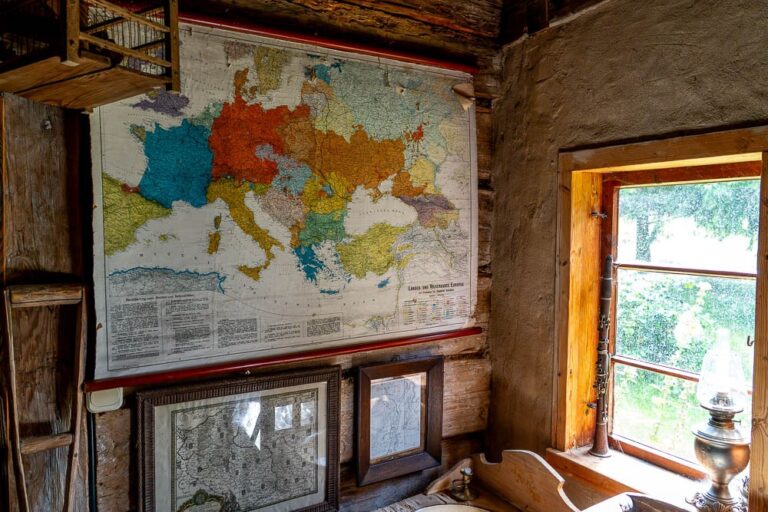
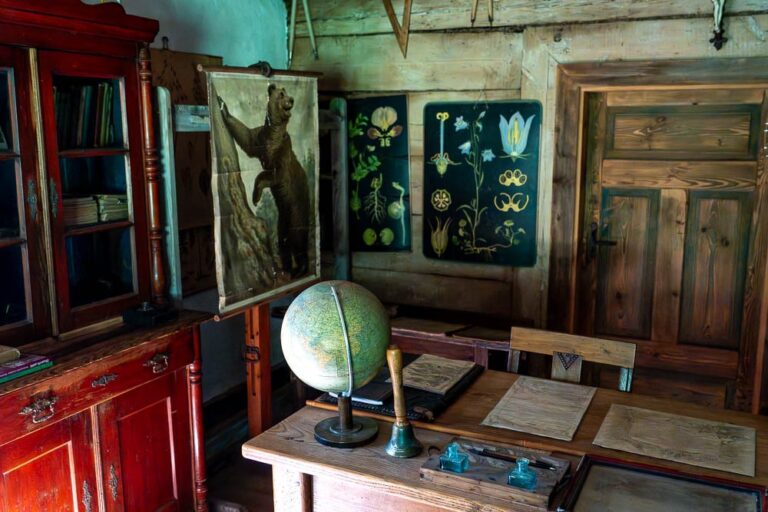
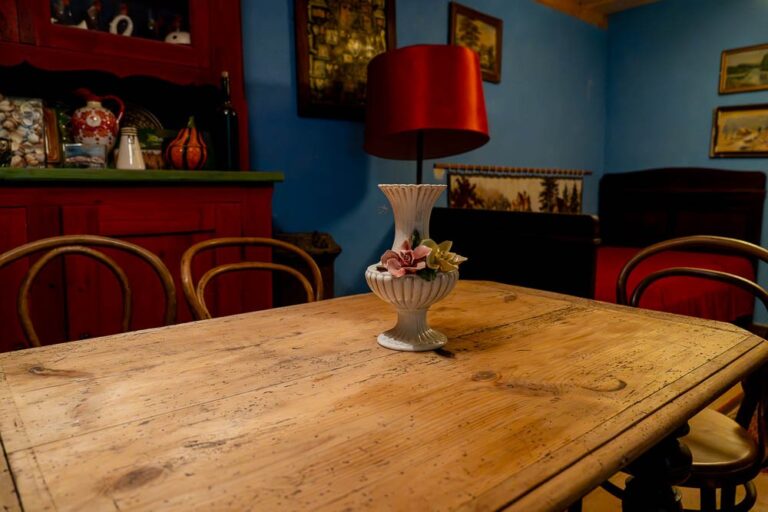
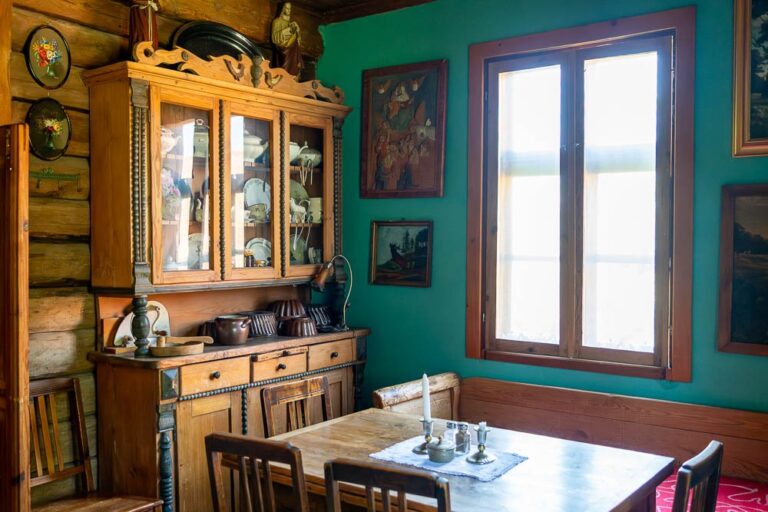
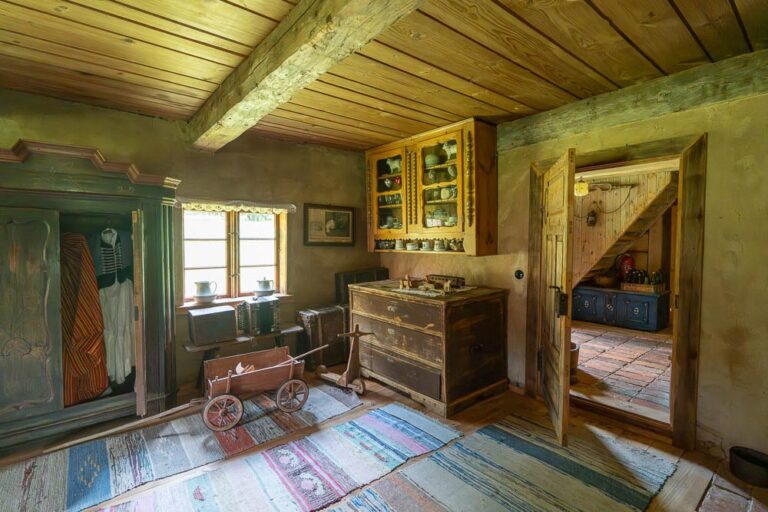
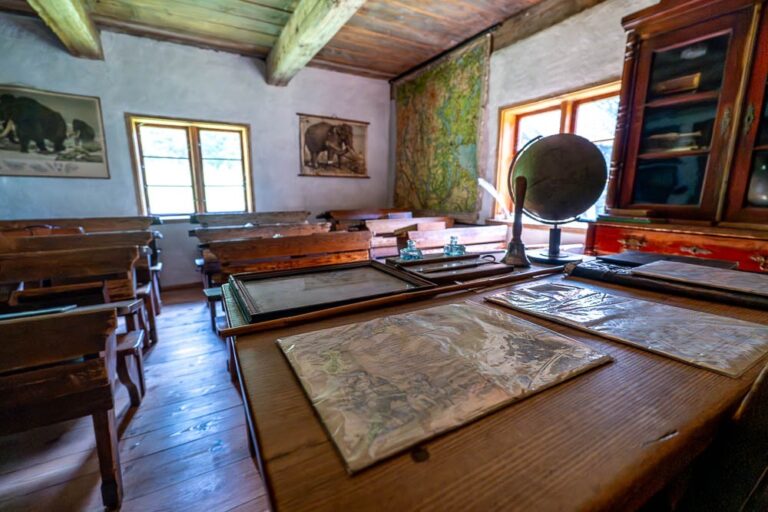
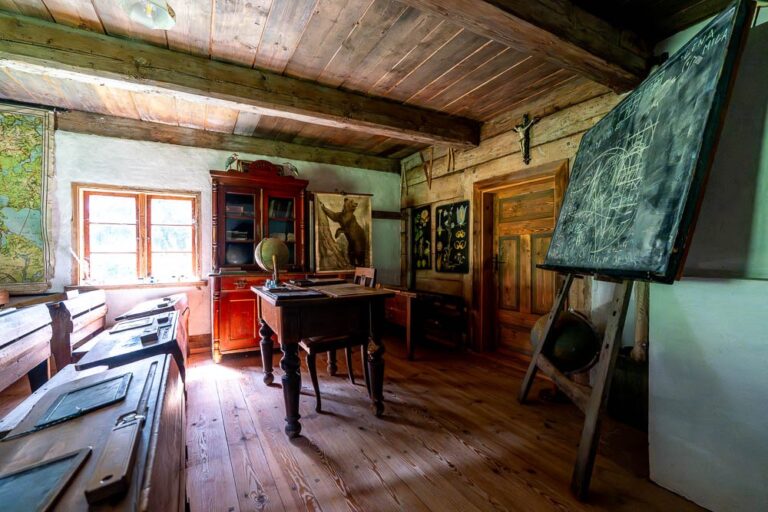
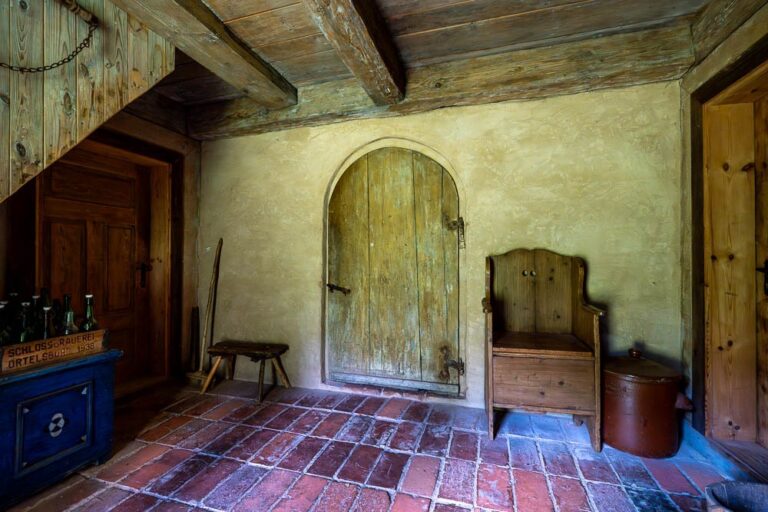
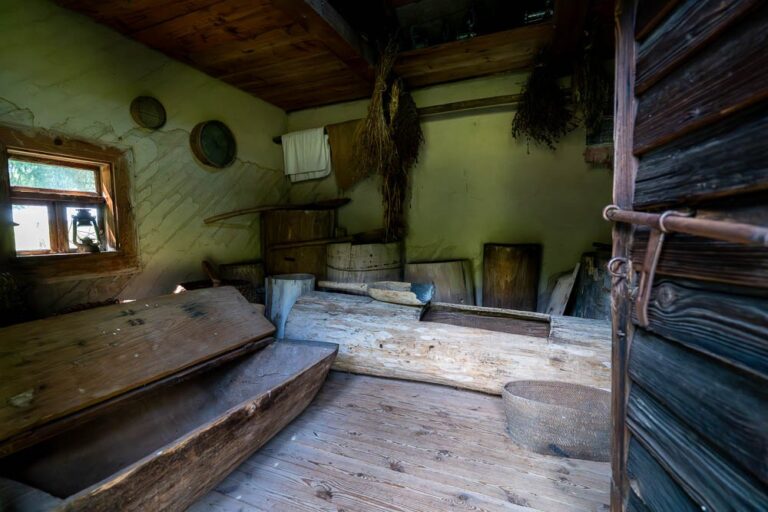
The cottage houses a museum: the rooms on the ground floor have been adapted to resemble a residential interior and a one-room village school, complete with the teacher’s living quarters.
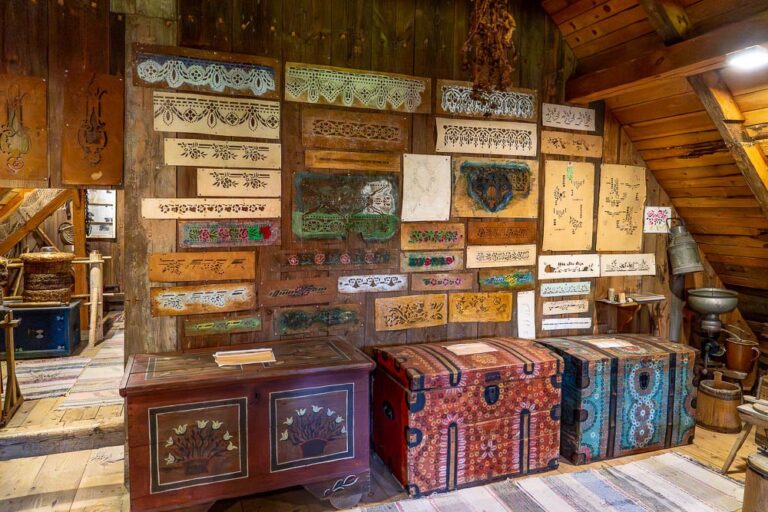
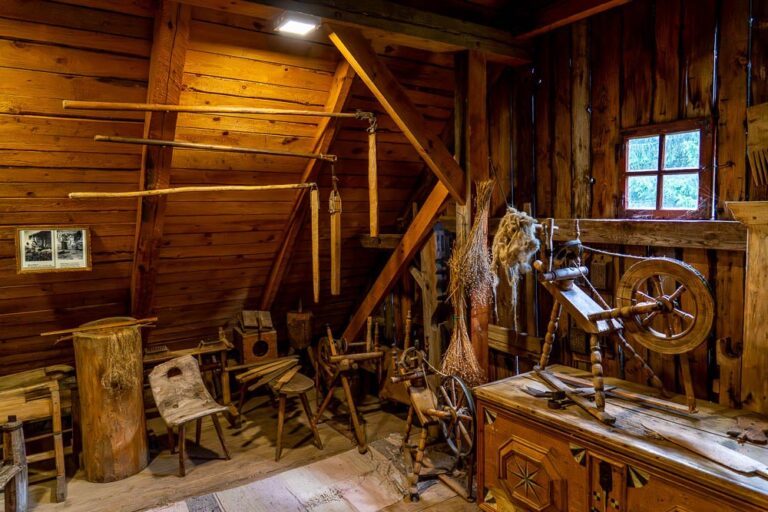
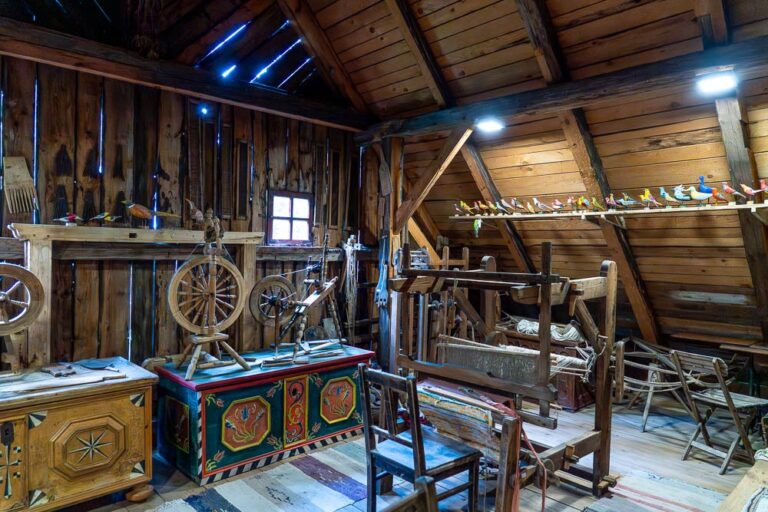
The spacious attic hosts an exhibition detailing the history of the Warnowo cottage and arcaded architecture, alongside an ethnographic display of tools and equipment used in households of the era. Additional exhibits are housed in the adjacent granary.
fot. Jarosław Kowalski