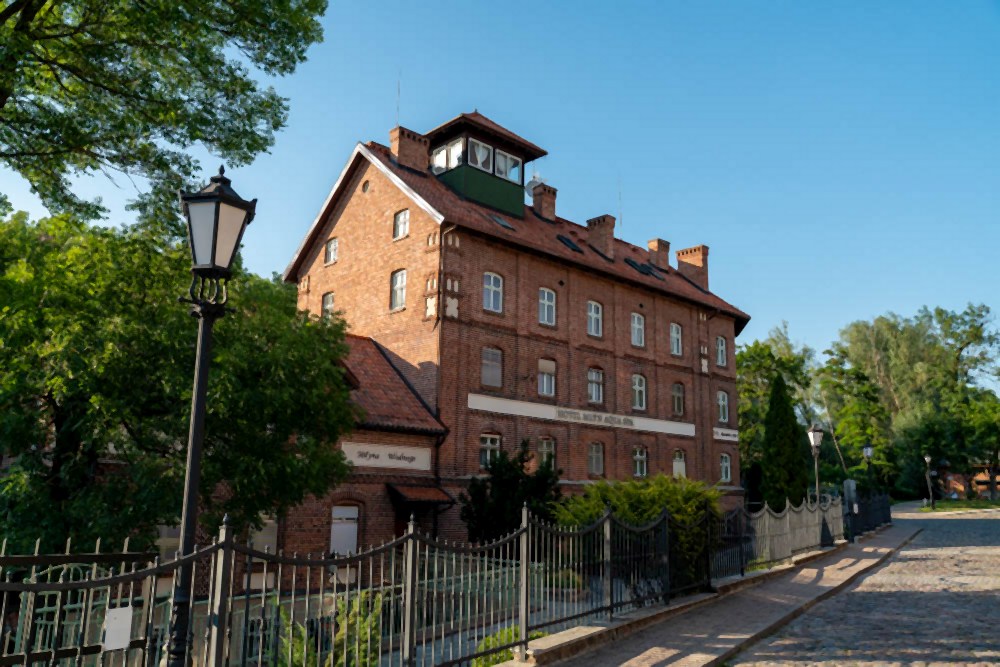
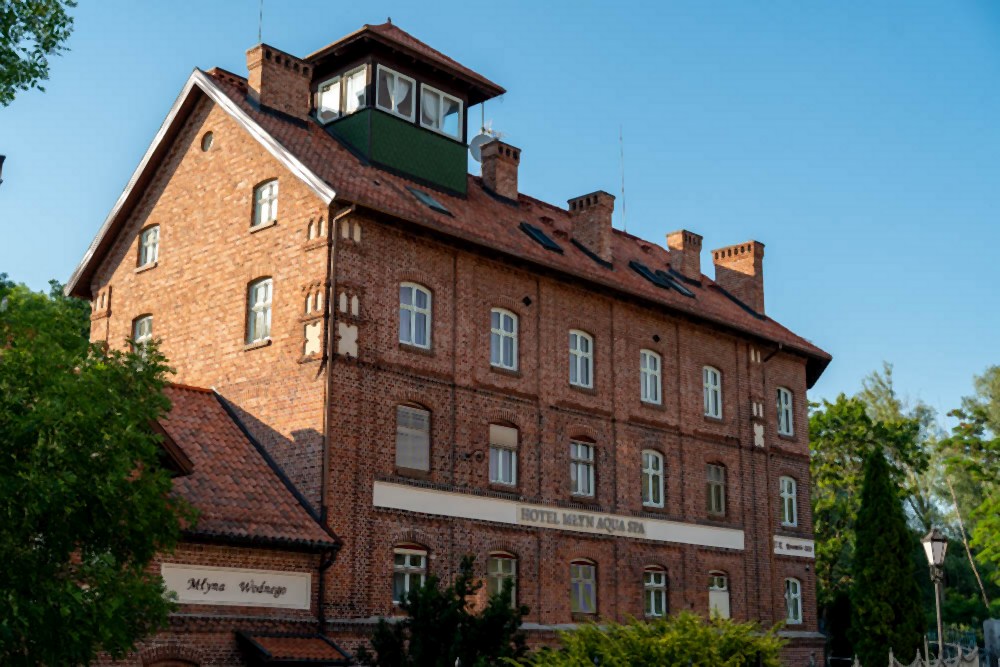
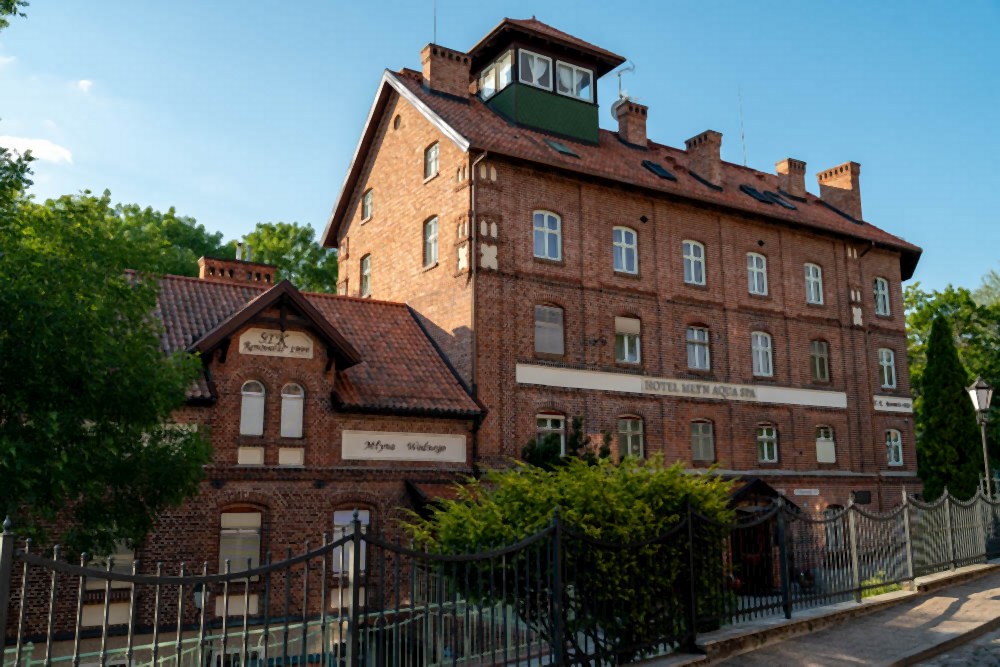
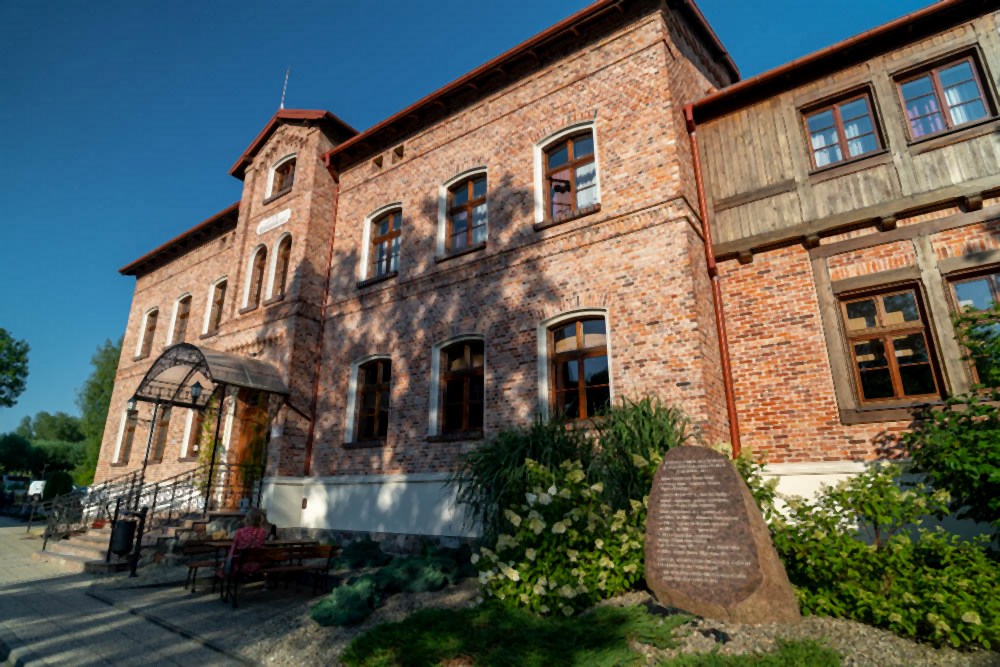
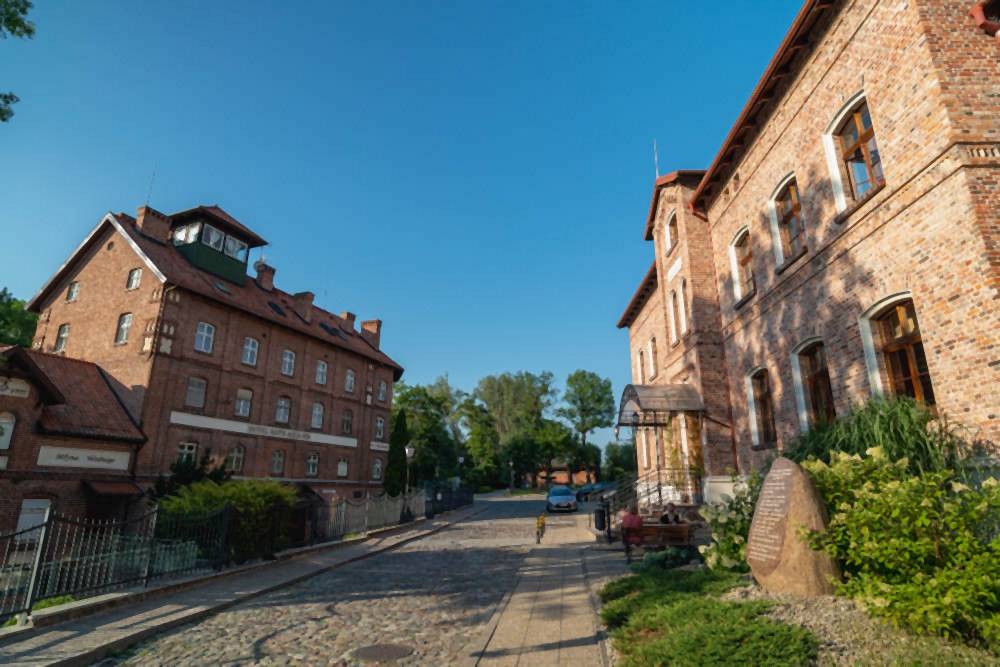
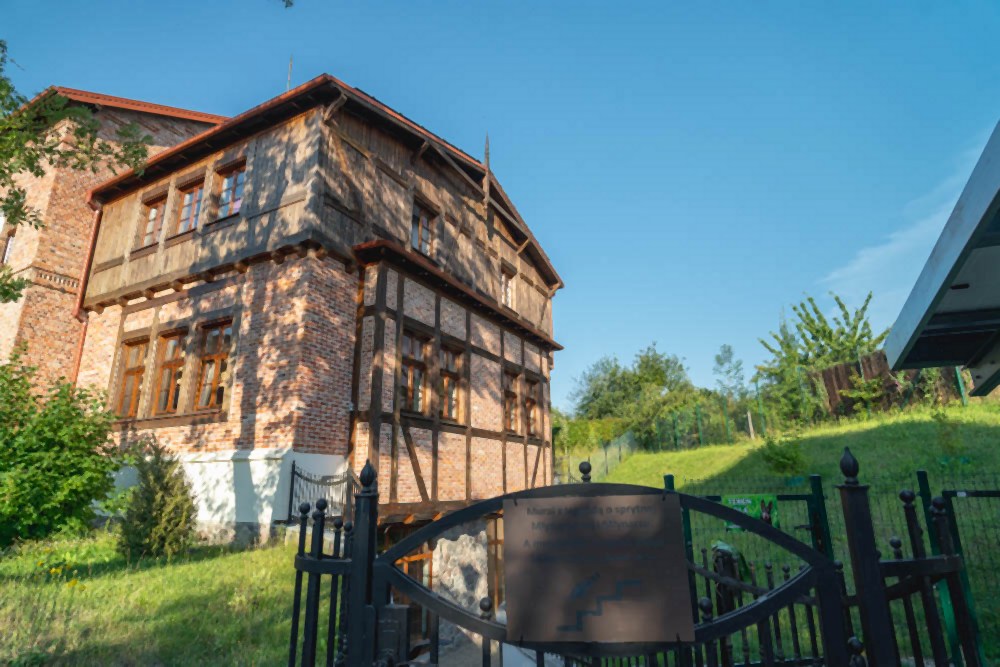
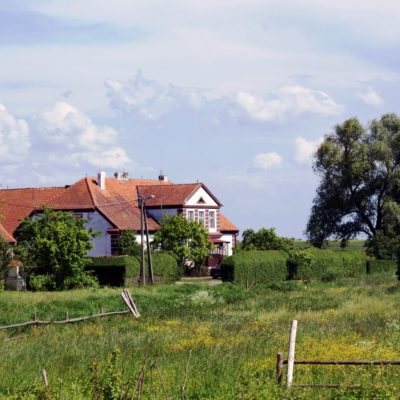
The history of this place is intertwined with the nearby Kumiela River. During the Teutonic rule (13th century), the Strauchmühle, or Bush Mill (now Hotel Młyn), was established at this location.
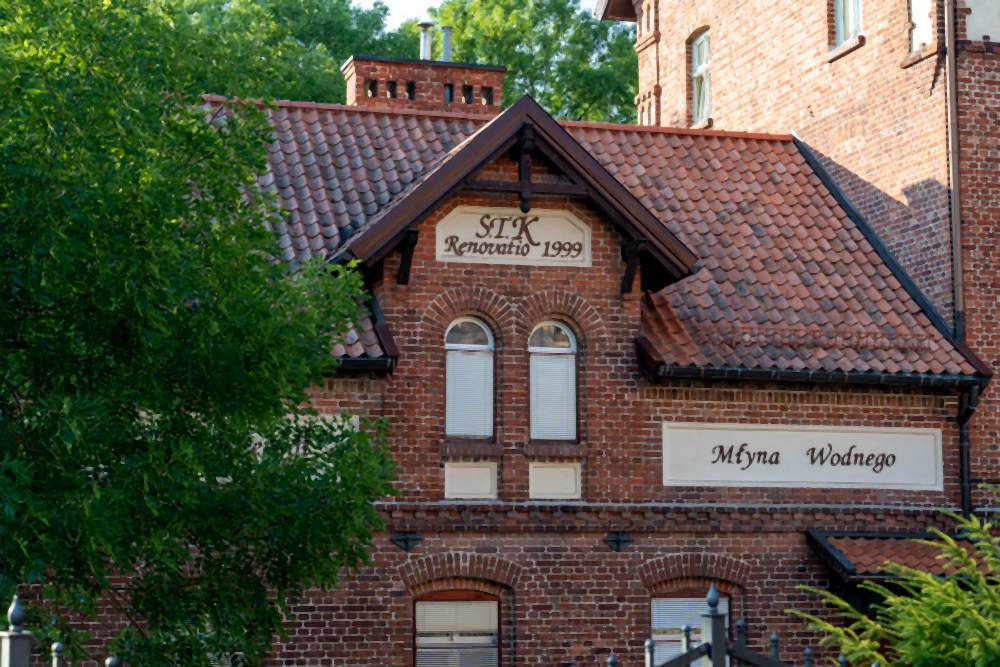
The Bush Mill originally consisted of one building (now a restaurant) with a flume and a wheel. In the 19th century, a new southern section – including a “miller’s house” (now the hotel building) – was built in brick, and the wheel was replaced with a water turbine. Finally, in 1908, an extension was added, completing the expansion of the now-preserved Water Mill Complex, commemorated with a sandstone date plaque on the building’s wall.
The mill survived the ravages of war mostly unscathed, after which it was seized by the Polish state and electrified.
It continued to be used for its original purpose as a grain mill and silo until the floods of the mid-1970s. The Kumiela River – which Elbląg residents call “Dzikuska” (“the Savage”) due to its wild and mountainous nature (flowing down from the Elbląg Upland) – flooded over once again. The damage was so great that the decision was made to forgo renovations. Instead, the mill was gradually decommissioned.
The building was finally abandoned by the end of the 1980s. In 1991, the entire Historical Water Mill Complex was registered as Cultural Property.
In 1994, the mill was severely damaged by a fire, including the complete incineration of the roofing and ceilings. It has since been restored under the supervision of a Conservation Officer, and now houses the Hotel Młyn and its restaurant.
Photo. Jarosław Kowalski