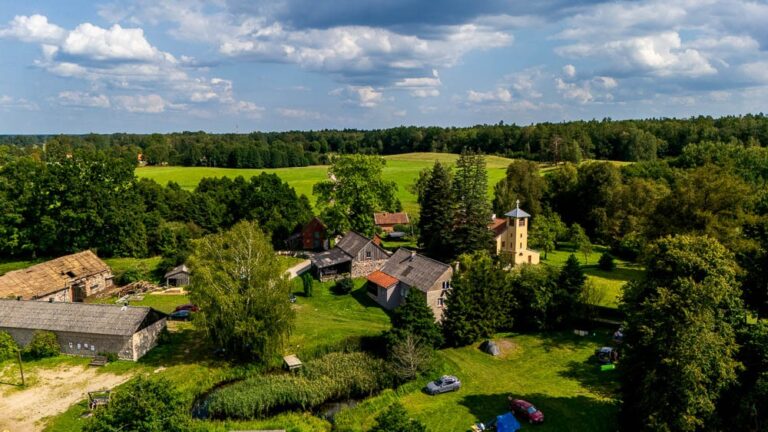
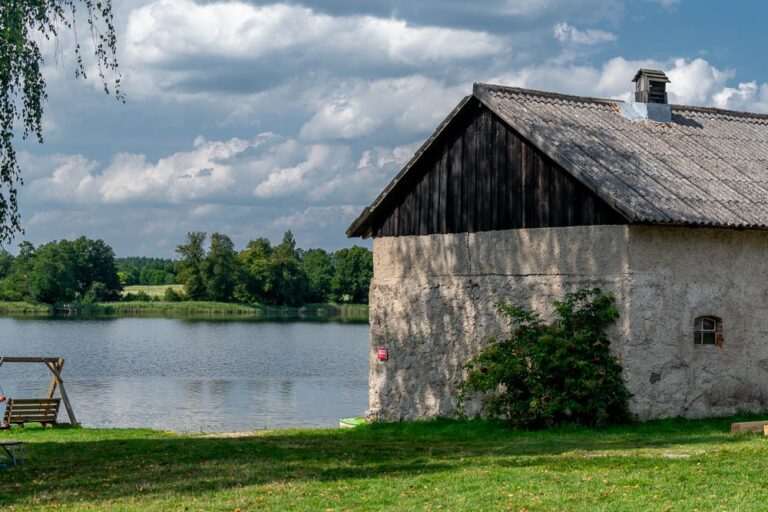
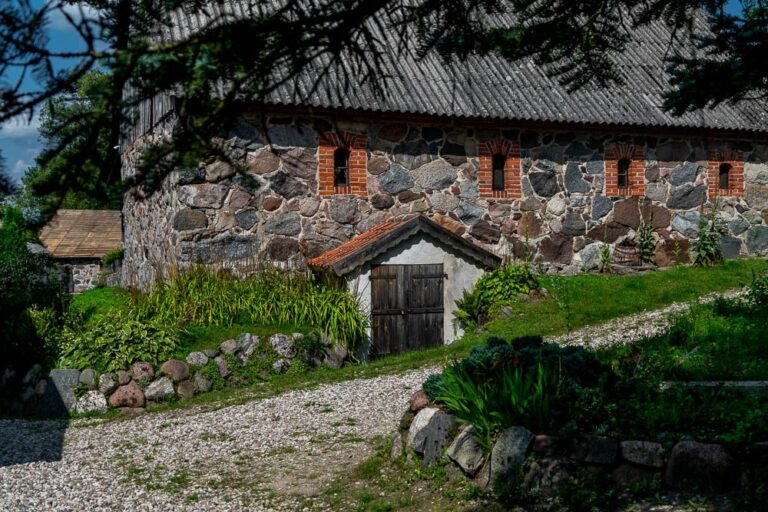
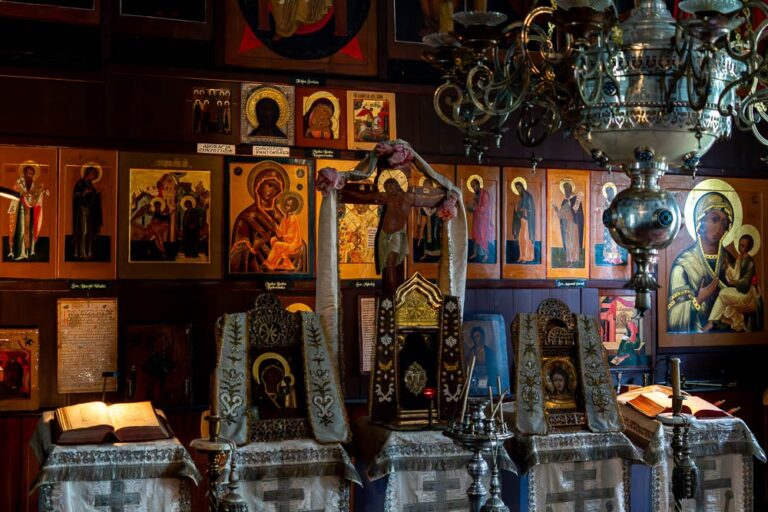
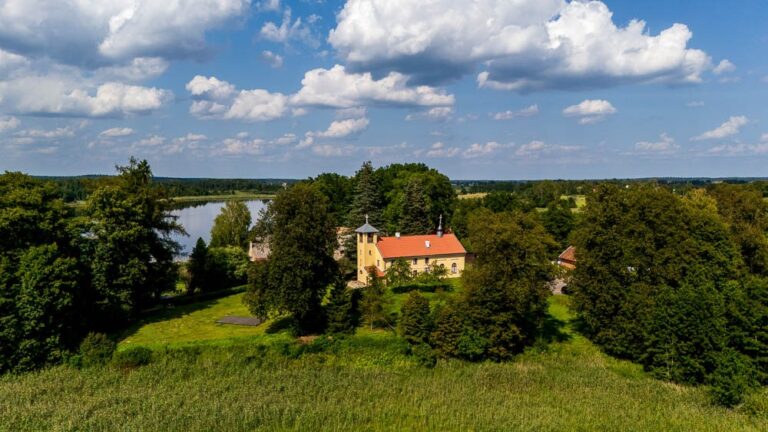
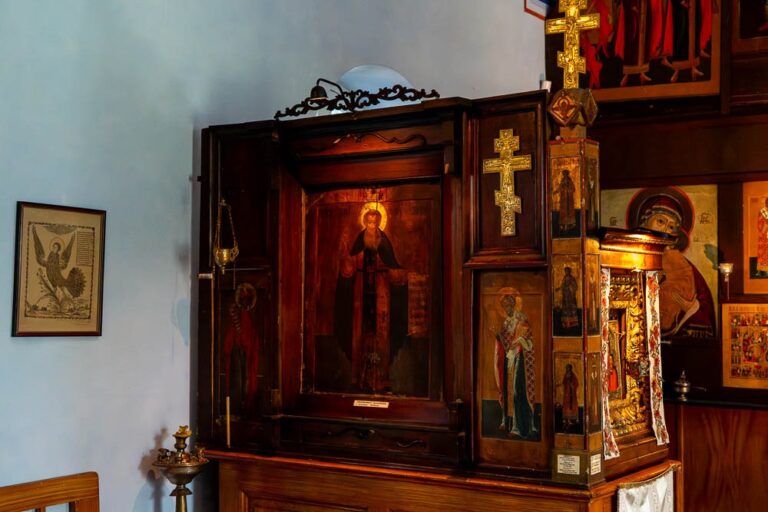
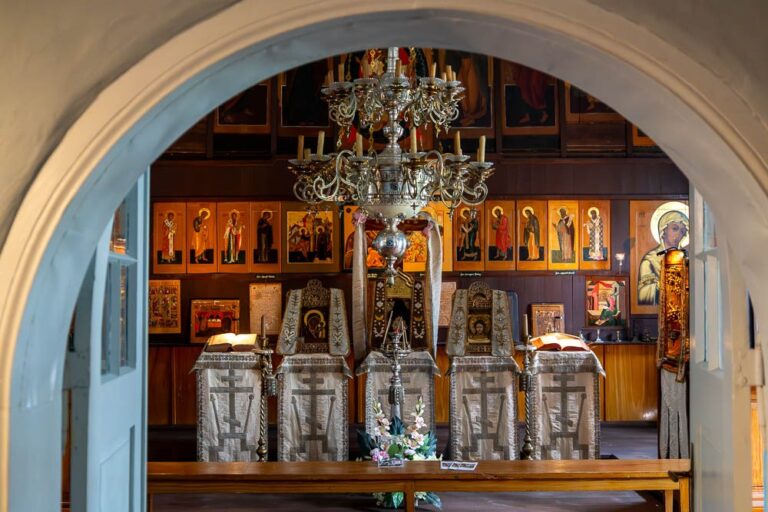
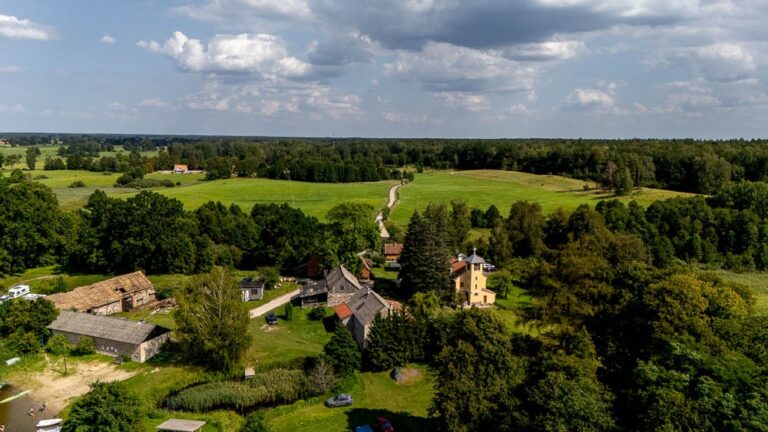
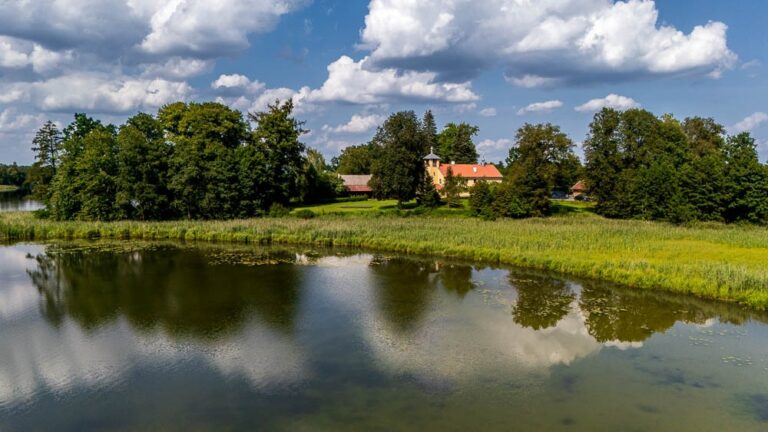
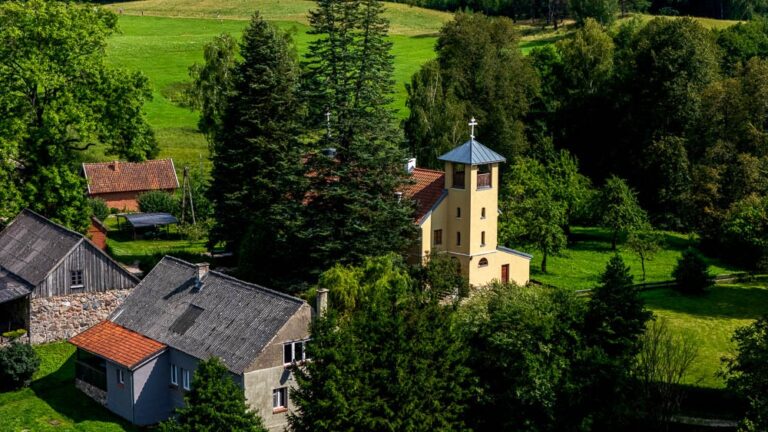
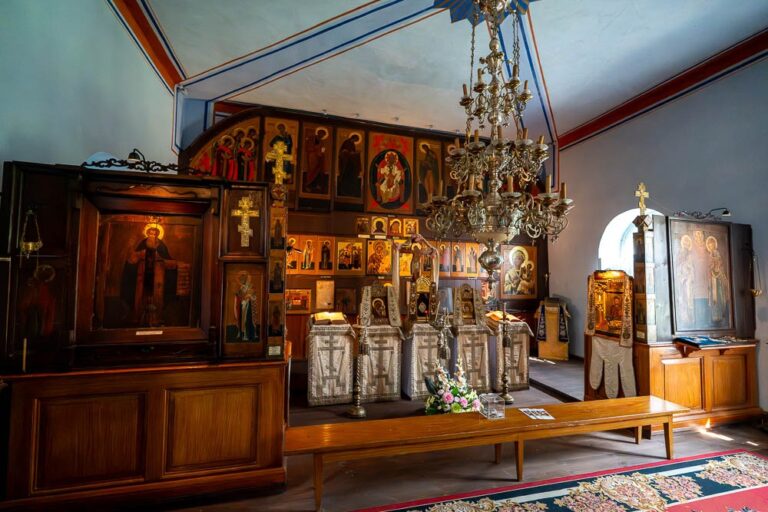
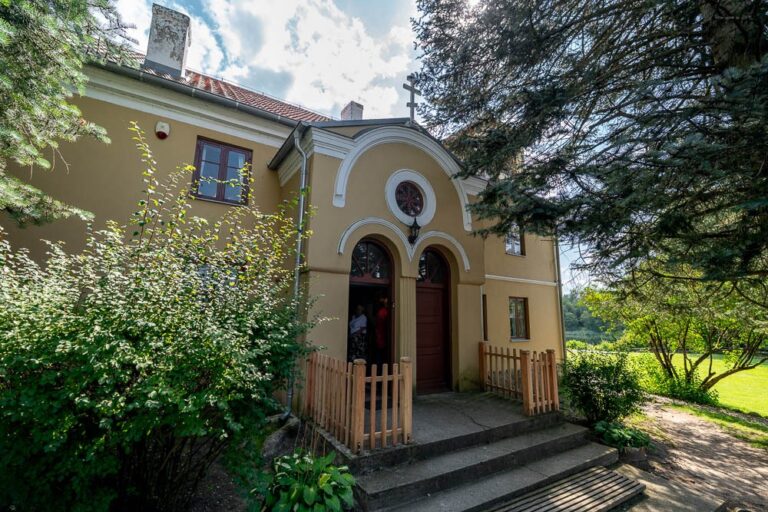
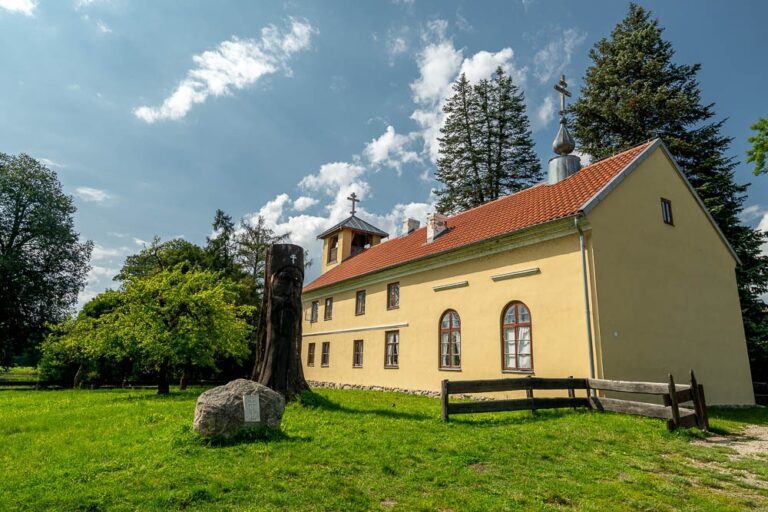
In 1885, a female community of Old Believers was established in buildings overlooking Lake Duś. Initially, the community would consist of not more than 40 nuns, who devoted their lives to prayer and farmwork, as well as caring for the elderly and those in need. The molenna (prayer house) features beautiful icons depicting the Holy Trinity, the Mother of God, Christ, and the prophets. A prominent feature is the 3.5-meter-high chandelier adorned with 32 candles, donated in 1910 by a Russian merchant as a memorial to his late wife, with the 32 candles symbolizing her age at the time of her death.
The iconostasis is one of the few surviving Old Believer iconostases in Poland still preserved in situ (within the walls of the former convent prayer house). The surviving iconostasis is faithful in form and iconography to the pre-reform canon, making it an artefact of immense value for research into Orthodox art and Old Believer culture.
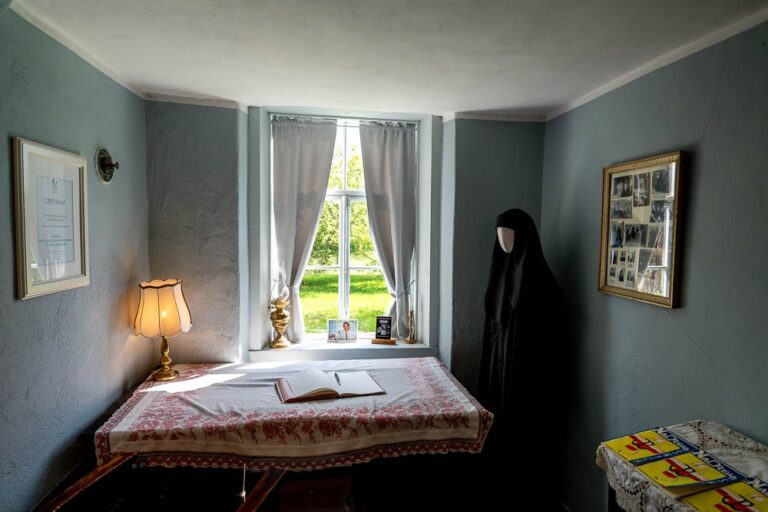
The convent remained active until World War II, but the community dwindled in the post-war years. The death of the last nun in 2006 brought an end to over a century of monastic tradition at the site.
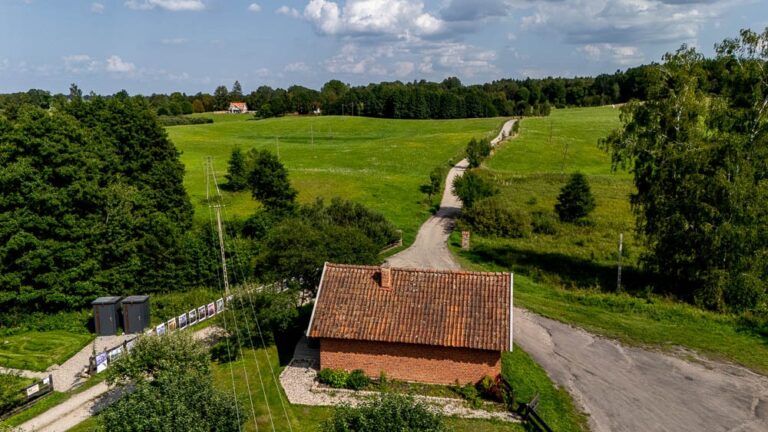
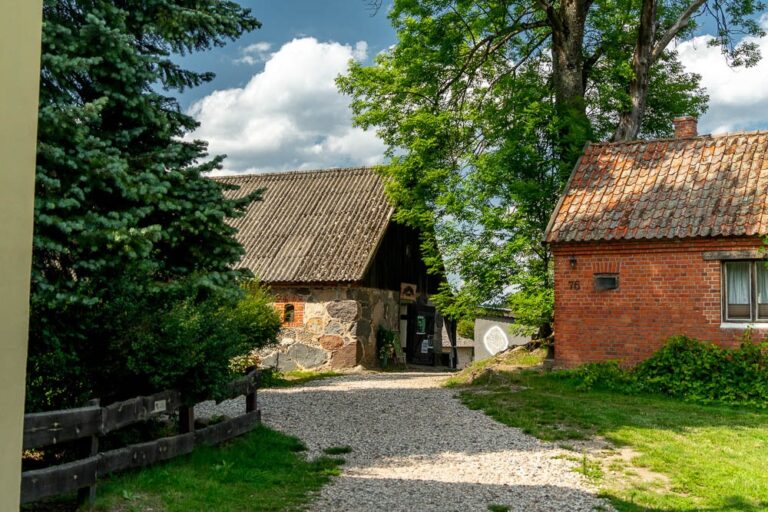
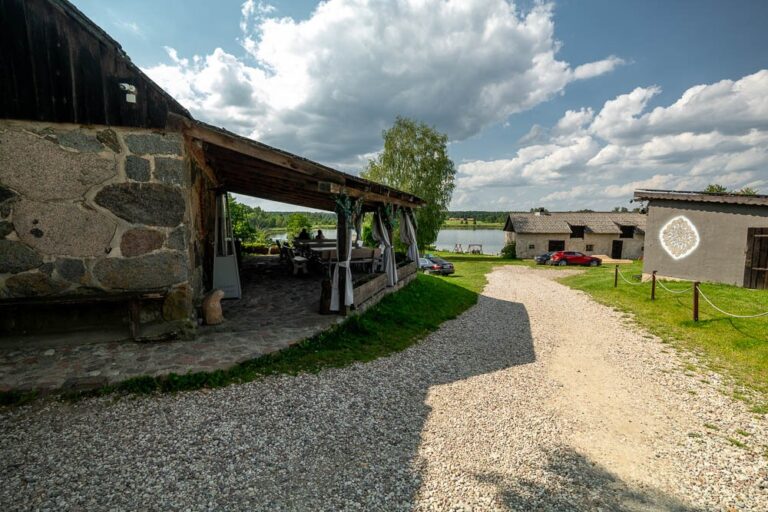
After 1968, the property passed into private hands and now functions as the Museum of Icons and Old Believer Culture (Muzeum Ikon i Kultury Staroobrzędowców), offering accommodation, private visits, as well as rental of boats and horse-drawn carriages.
Wojnowo remains one of Poland’s foremost Old Believer centres, both in terms of spirituality and history, preserving a unique snapshot in time of a religious community whose tradition was cut short.
Photo: Jarosław Kowalski